
Discharge Printing Guide: Which Shirt Colors and Materials Work Best?
/
Water Base Discharge Printing: What Shirt Colors and Materials Work Best
Water base discharge printing is a great option when you want a soft, breathable print that feels like it is part of the shirt instead of sitting on top of the fabric.
Unlike traditional plastisol ink, discharge ink removes the dye from the garment and replaces it with pigment. When it works properly, the result is a smooth, lightweight print with very little texture.
The main thing to know is that discharge printing does not work the same on every shirt. The final result depends on the shirt color, fabric content, dye type, and how the garment was made.
Best Materials for Discharge Printing
Discharge ink works best on 100% cotton garments.
Cotton reacts better because the discharge process is designed to work with cotton fibers and cotton dyes. The more polyester or synthetic material in the shirt, the less predictable the print becomes.
Best choices include:
100% cotton tees
Ring spun cotton
Combed cotton
Cotton fleece
Garment dyed cotton, depending on the dye
Pigment dyed cotton, depending on the color
Blends, tri-blends, polyester, performance fabrics, and moisture wicking shirts are usually not ideal for discharge printing. These fabrics may not react properly, which can leave the print looking faded, dull, or inconsistent.
Best Shirt Colors for Discharge Printing
Darker cotton shirts usually create the strongest discharge effect because there is more dye for the ink to remove.
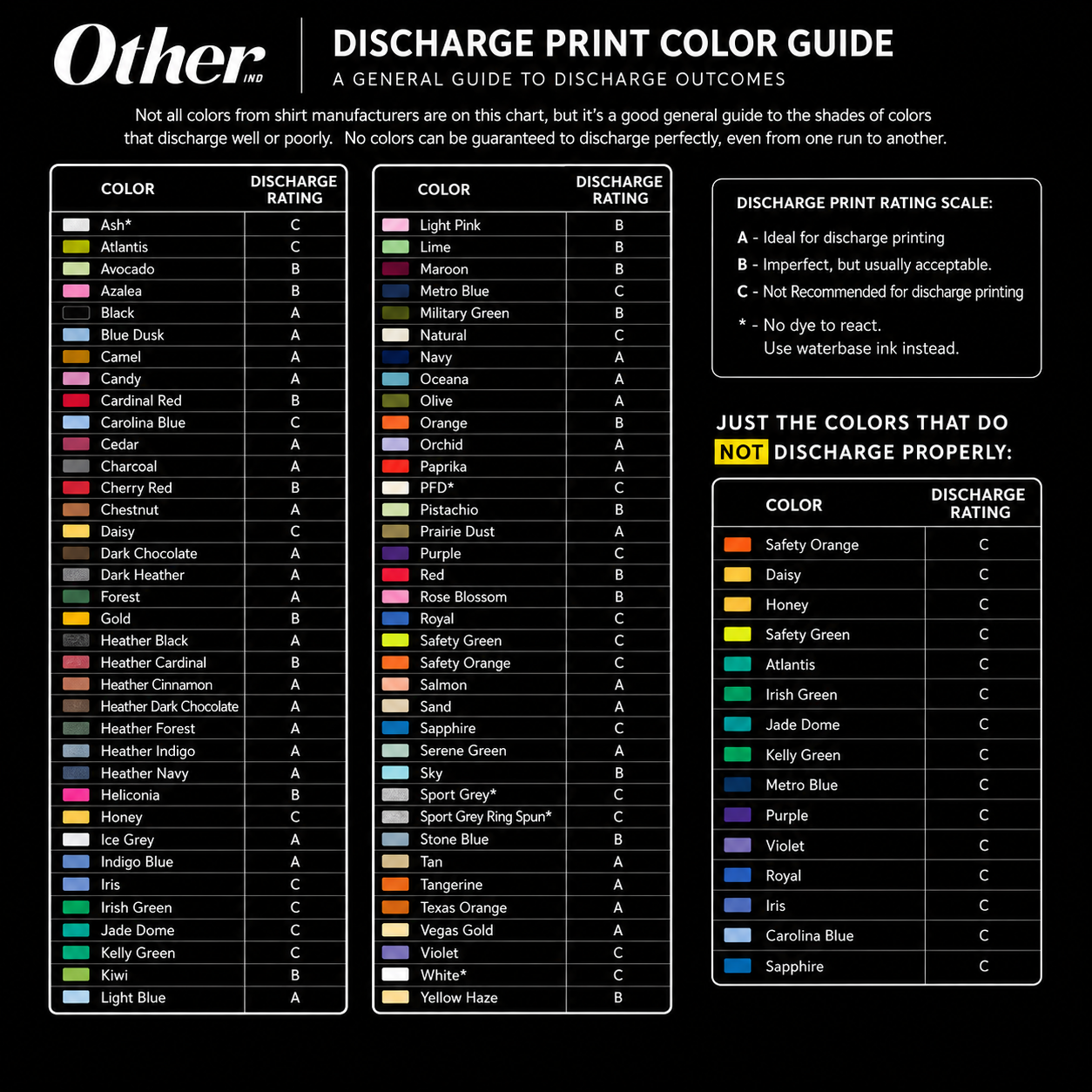
Colors like black, navy, charcoal, forest, olive, dark chocolate, tan, sand, and other earth tones often work well.
These colors usually produce the soft, vintage, worn-in look that makes discharge printing so popular.
Colors That Can Be Tricky
Some shirt colors may discharge, but the results are not always perfect. Reds, oranges, light pinks, certain blues, and some greens can shift in tone or come out more muted than expected.
This does not always mean the print will look bad. It just means the final result may have more of a vintage or imperfect look instead of a clean, exact color match.
Colors That Are Not Recommended
Bright safety colors, vivid greens, strong blues, purples, and some yellows often do not discharge well.
Colors like safety orange, safety green, royal blue, purple, Kelly green, and bright yellow tones can be difficult because the dyes used in those garments may resist the discharge process.
For these shirt colors, standard water base ink, plastisol ink, or another print method may be a better choice.
Why Discharge Results Can Vary
Even if a shirt is 100% cotton, discharge results can still vary. Different manufacturers use different dye formulas, and even the same color can change slightly from one production batch to another.
Discharge results can be affected by:
Garment dye
Fabric content
Shirt color
Garment brand
Curing temperature
Ink formula
Production batch
Because of this, discharge printing can never be guaranteed to come out exactly the same every time.
When Discharge Printing Is a Good Choice
Discharge printing is a strong option when you want a print that is:
Soft
Breathable
Lightweight
Vintage looking
Smooth to the touch
Great for larger prints
Less heavy than plastisol
It is especially useful for dark cotton shirts where you want the print to feel more natural and less rubbery.
When Discharge May Not Be the Best Option
Discharge may not be the right choice when you need exact color matching, bright white prints on difficult shirt colors, or consistent results across multiple garment colors.
It is also not ideal for polyester, performance fabrics, or heavily blended garments.
The Bottom Line
Water base discharge printing can create some of the softest and best feeling screen prints available, but the shirt choice matters.
For the best results, choose 100% cotton garments in darker or earth toned colors that are known to discharge well. Bright safety colors, vivid blues, purples, greens, and some yellows are less reliable.
If you want a soft, breathable, retail-quality print, discharge printing can be a great option. The key is choosing the right garment before production begins.